



In her October 2025 General Conference message, Sister Andrea Muñoz Spannaus taught that recognizing and trusting living prophets is essential for navigating “the many voices” of our day. Just like the woman of Shunem who discerned that Elisha was “a holy man of God,” we too can receive a personal witness of God’s chosen servants.
But a thoughtful question arises in our time: Why should modern believers place their trust in a living prophet?
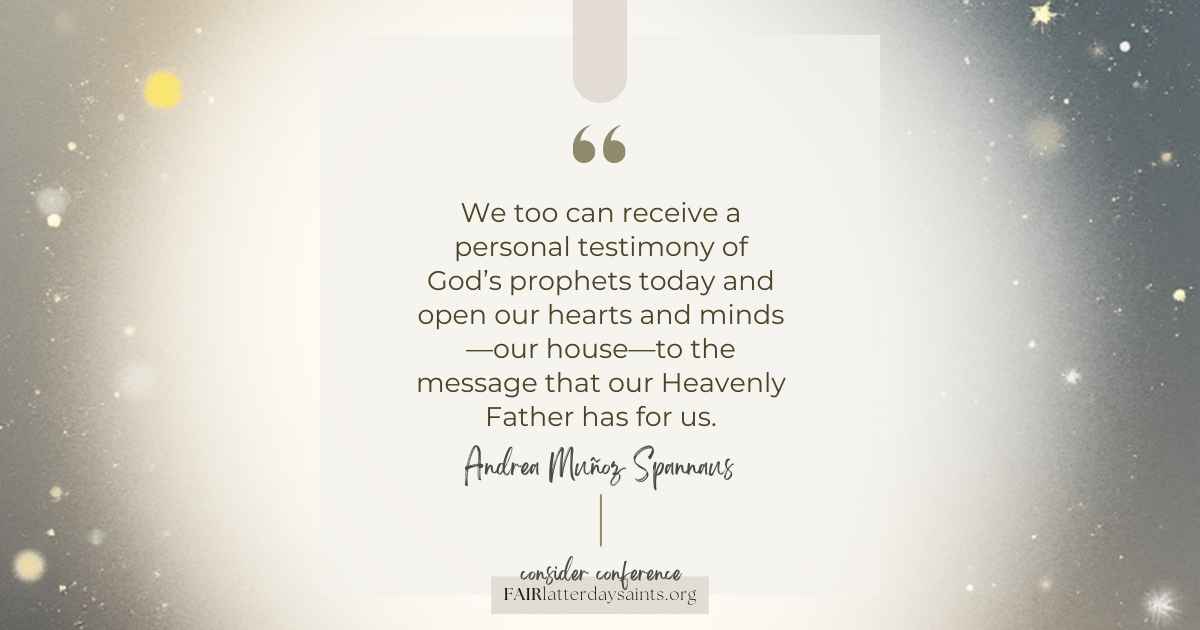
“We too can receive a personal testimony of God’s prophets today and open our hearts and minds—our house—to the message that our Heavenly Father has for us.” – Andrea Muñoz Spannaus
Common Criticism: “Why should modern believers place their trust in a living prophet?”
Many question the role of prophetic authority in a contemporary world. They argue that moral reasoning, personal insight, or social consensus should outweigh the voice of a single religious leader. Some see prophetic guidance as unnecessary or outdated, wondering why God would speak through chosen servants today when information and opinions are so widely accessible.
Fallacy at Work: Presentism
Presentism is the tendency to judge spiritual realities through strictly modern assumptions—expecting prophetic consensus to match popular opinion, or assuming divine authority must function like other forms of leadership in today’s culture.
Applied here, presentism views prophets merely as organizational figures rather than divinely appointed messengers. It overlooks the scriptural pattern that God has always worked through humble, imperfect servants and ignores the invitation to seek personal confirmation through the Holy Ghost.
Sister Spannaus’ Correction: Prophets speak for God.
Sister Spannaus teaches that prophets are called and authorized to convey the Lord’s will. They are “seers and revelators” who receive commandments, prepare God’s children for future challenges, and testify of Jesus Christ. Continuing revelation is not optional—it is foundational to the restored gospel: “He will yet reveal many great and important things.”
Modern prophets work unitedly in councils established by Christ Himself. Their decisions are made through prayer, unanimity, and revelation to ensure “the Lord’s will will be done.” And, crucially, every disciple can receive the same confirming witness the Shunammite woman received.
Resolving this Fallacy: The criticism dissolves when we understand that prophetic trust is ultimately trust in God. Prophets are not followed because they are flawless, but because they are chosen. Their authority does not come from personal strength but divine appointment. Through the Holy Ghost, God invites each of us to confirm their calling and experience the blessings that come from heeding their voice.
Once we know they are God’s anointed ones, our lives will be easier… as we obey their voices with trust, faith, and hope.
Living Apologetics: Personal Revelation and Prophetic Trust
A common concern today is the overwhelming number of competing voices—online personalities, commentators, influencers, and critics. In such a noisy world, some wonder how prophetic counsel can be trusted above all others.
Sister Spannaus reframes this beautifully: prophets do not compete with the world’s voices—they cut through them with heaven’s perspective. Like the woman of Shunem, we learn to “perceive” truth through the Holy Ghost. Trusting prophets is not blind loyalty; it is spiritually confirmed discipleship.
 Practical Apologetic Use:
- If someone says: “I do not see why modern believers should place particular trust in a living prophet.”
- You can respond: “Throughout scripture, God has consistently chosen prophets to convey His will. Their authority does not rest on personal insight or popularity but on divine calling. Modern prophets continue that pattern today, offering revelation we can each confirm through the Holy Ghost. Trusting their counsel is ultimately an expression of trust in God, who directs them.”
Ways to Apply Today:
1️⃣ Pray specifically for a witness. Follow Sister Spannaus’ invitation: kneel, ask God if the prophet is His messenger, and listen with real intent.
2️⃣ Notice how prophetic counsel blesses you. Keep a short list of how following their invitations impacts your peace or clarity.
3️⃣ Create a place for prophetic guidance in your life. The Shunammite woman built a room; we can build space in our schedule, study, and decisions for the Lord’s voice.
Keep This Talk With You
Sister Spannaus’ message calls us to anchor our discipleship in the Lord’s pattern: God speaks through prophets. In an age filled with doubt, distraction, and shifting philosophies, disciples of Christ can stand steady by rooting themselves in revealed truth and personal testimony.
As we seek, listen, and follow with faith, we become like the Shunammite woman—quick to discern holiness and eager to welcome the Lord’s servants into our lives. Trusting prophets does not remove challenges, but it brings spiritual stability “to hold on to every good thing until the Second Coming.”
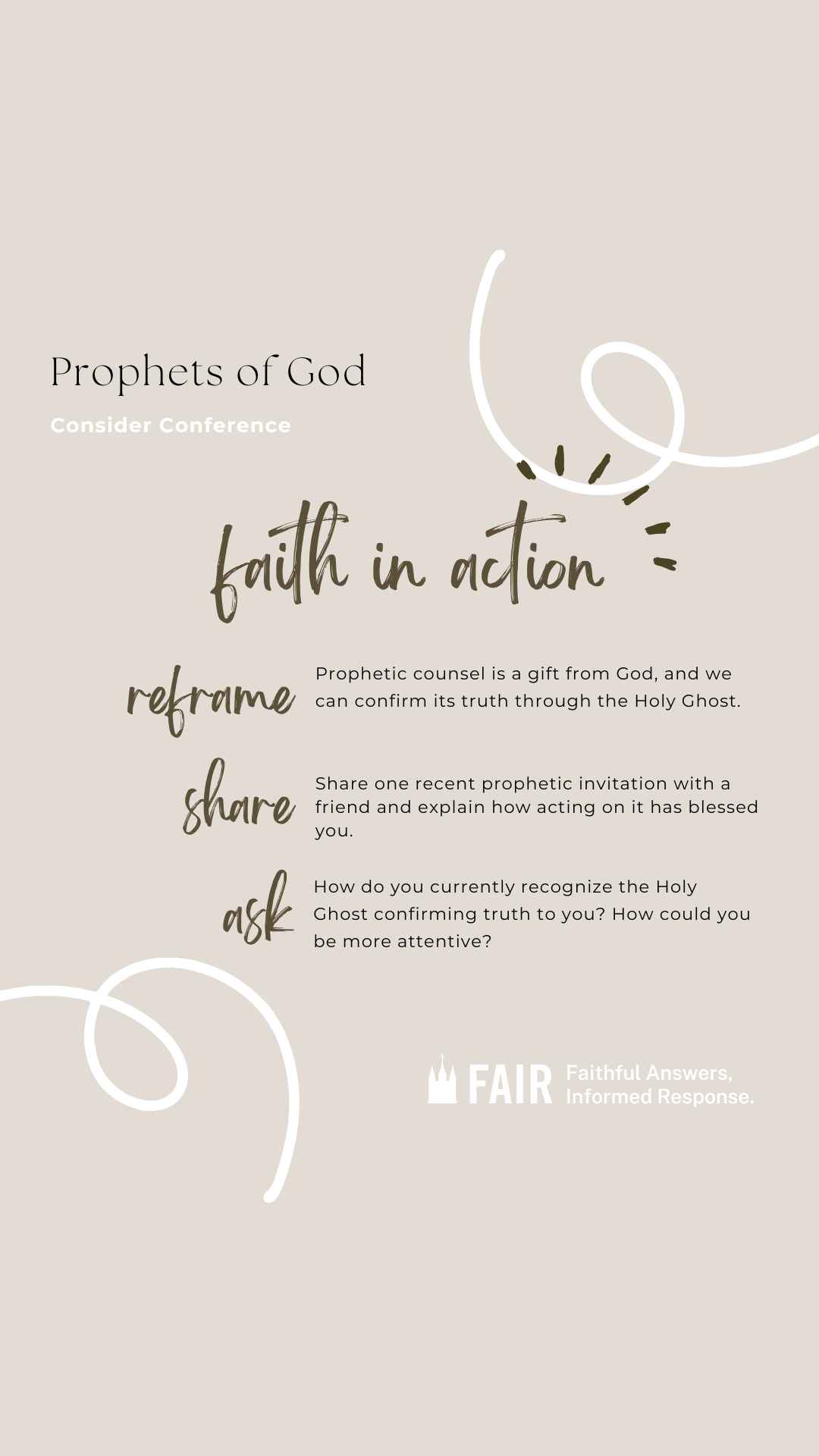
This week, try one small step:
- Study one recent prophetic invitation and apply it literally for seven days.
- Talk with a friend or family member about how you recognized a prompting recently.
- Ask the Lord what He wants you to understand about continuing revelation. “Do I have a personal testimony of God’s living prophets?”
How will you invite the Holy Ghost to deepen your trust in the Lord’s chosen servants this week?
The Consider Conference series by FAIR offers an in-depth look at recent General Conference talks to help members of the Church of Jesus Christ of Latter-day Saints navigate common questions, misunderstandings, and criticisms. Each post provides doctrinal insights, historical context, and practical ways to apply gospel principles in everyday conversations. Through this series, we hope to equip readers with faith-promoting resources that encourage thoughtful reflection, respectful dialogue, and a stronger foundation in gospel truths, fostering both personal conviction and meaningful discussions with others.
The post Prophets of God appeared first on FAIR.
Continue reading at the original source →