



In his October 2025 General Conference address, “Forsake Not Your Own Mercy,” Elder Matthew S. Holland taught a compassionate and clarifying truth about God’s mercy and our tendency to withdraw from it. Drawing on the story of Jonah, he showed how feelings of fear, shame, or inadequacy can lead individuals to distance themselves from God—not because mercy has been withdrawn, but because they mistakenly believe they no longer qualify for it.
Elder Holland firmly corrects this misunderstanding. Divine help is not reserved for those who have already fixed themselves. God’s mercy is active, immediate, and available precisely because we are imperfect.
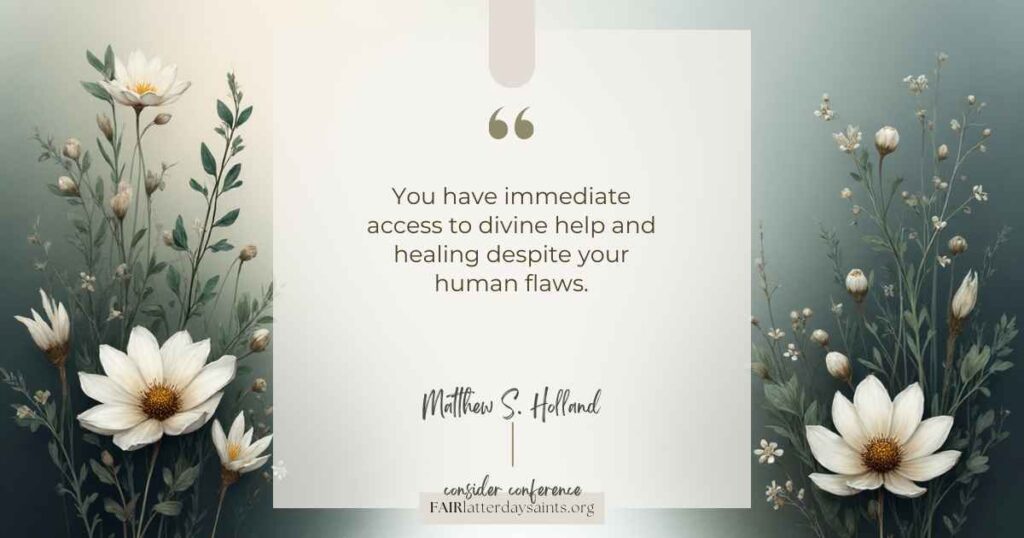
You have immediate access to divine help and healing despite your human flaws.
This teaching reframes how we understand repentance, worthiness, and our relationship with God when we feel discouraged.
Common Criticism: “Because of repeated mistakes or personal failure, some people believe they have forfeited access to God’s help.”
This belief often develops quietly over time. After repeated struggles, unresolved guilt, or unmet expectations, individuals may conclude that God’s patience has worn thin—or that they must first become spiritually “better” before turning back to Him. Instead of reaching toward God, they withdraw, delay repentance, or attempt to endure alone.
Fallacy at Work: Self-Disqualification
Self-disqualification assumes that divine mercy operates on a threshold—that after enough failure, access to God’s help is revoked. This mindset turns mercy into a reward rather than a gift and reframes repentance as a prerequisite for help instead of the means by which help is received.
Elder Holland’s Correction: Mercy Precedes Movement
Through Jonah’s story, Elder Holland teaches that the prophet’s greatest error was not fleeing Nineveh, but distancing himself from God afterward. Jonah was not abandoned by the Lord; he abandoned the very mercy that could have sustained him.
God does not wait for us to become strong before offering help. Mercy is what enables repentance, courage, and change. Turning toward God—even imperfectly—is always the right first step.
Resolving this Fallacy: The gospel does not require disciples to qualify for mercy before seeking divine help. It invites them to receive mercy so that transformation can begin. When we stop disqualifying ourselves, we discover that God has been ready to help all along.
Living Apologetics: Mercy Is Not a Reward for the Worthy
One of the most damaging assumptions about faith is the idea that failure places people beyond God’s reach. Elder Holland’s message directly counters this belief and restores hope to those who feel spiritually weary or ashamed.
This teaching answers concerns such as: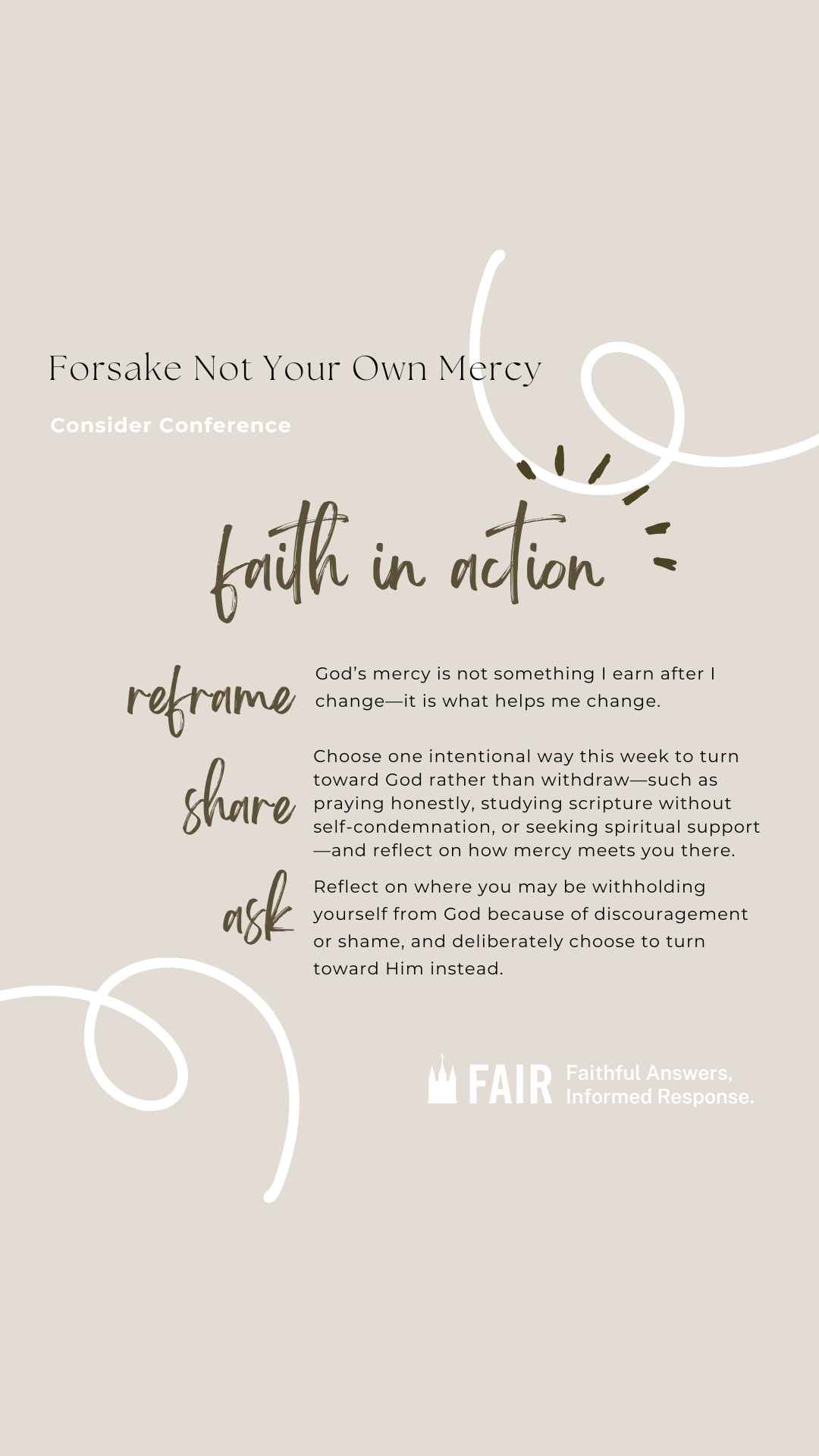
- “I’ve made the same mistake too many times.”
- “God must be disappointed in me.”
- “I should wait until I’m better before turning to Him.”
The gospel offers a different invitation: turn now.
Practical Apologetic Use:
- If someone says: “I’ve gone too far to come back.”
- You can respond: “Elder Holland teaches that we have immediate access to divine help despite our flaws. Mercy isn’t withdrawn because of failure—it’s offered because of it.”
Ways to Apply Today
1️⃣ Notice where discouragement leads to withdrawal, rather than repentance.
2️⃣ Replace delay with turning, even if progress feels incomplete.
3️⃣ Trust that mercy enables change, instead of waiting to change before seeking mercy.
Keep This Talk With You
Elder Holland’s message offers deep reassurance to disciples who feel unworthy, exhausted, or distant. The Lord’s mercy is not fragile, limited, or reserved for the flawless. It is immediate, sustaining, and constant.
Jonah’s story reminds us that when we withdraw from God, we are not being punished—we are forsaking our own mercy. The invitation of the gospel remains unchanged: return, trust, and receive.
Where might I be withholding myself from God’s mercy—and what would it look like to turn toward Him instead?

The Consider Conference series by FAIR offers an in-depth look at recent General Conference talks to help members of the Church of Jesus Christ of Latter-day Saints navigate common questions, misunderstandings, and criticisms. Each post provides doctrinal insights, historical context, and practical ways to apply gospel principles in everyday conversations. Through this series, we hope to equip readers with faith-promoting resources that encourage thoughtful reflection, respectful dialogue, and a stronger foundation in gospel truths, fostering both personal conviction and meaningful discussions with others.
The post Forsake Not Your Own Mercy appeared first on FAIR.
Continue reading at the original source →